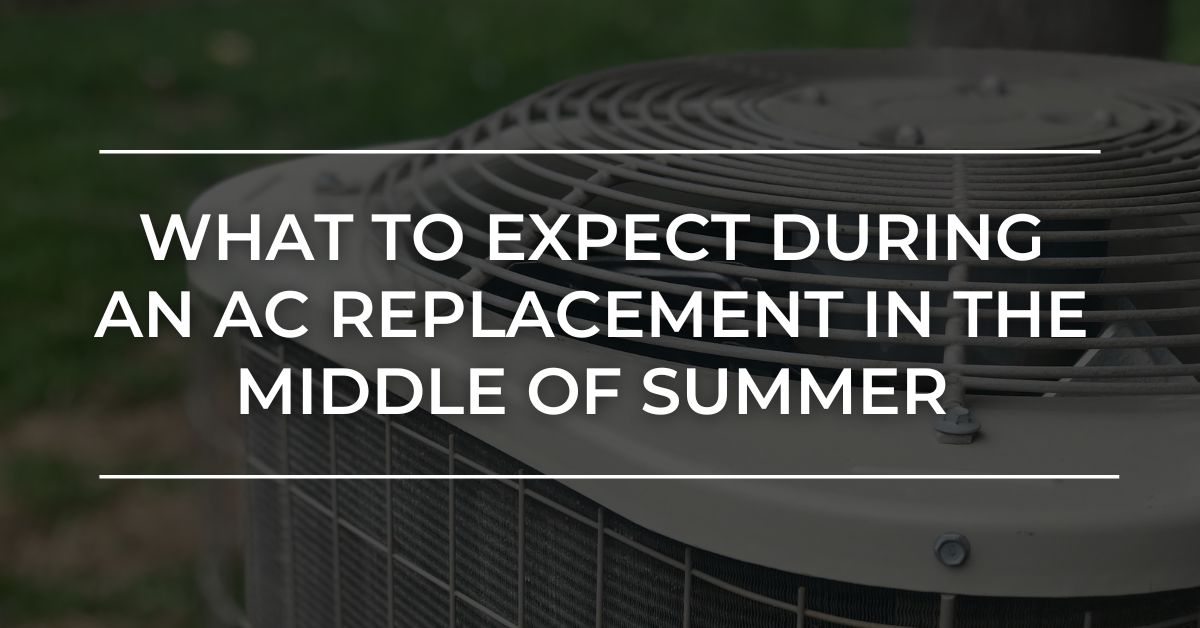
Replacing your AC system in the middle of summer is not ideal, but sometimes it is the right move. When your air conditioning unit stops keeping up, needs a major repair, or fails completely during a North Carolina summer, waiting may not be realistic.
Whether you live near the coast in Wilmington, Hampstead, Jacksonville, or Shallotte, or farther inland around Cary, Clayton, Southern Pines, Pinehurst, Fayetteville, Dunn, or Goldsboro, summer heat can put a lot of strain on your cooling system. Coastal areas may also deal with heavier humidity, while some inland areas may feel more intense heat during long stretches of hot weather.
If you are scheduling an AC replacement during peak cooling season, here is what you can expect.
First, Make Sure Replacement Is the Right Choice
AC replacement is not always the only option. In some cases, a repair may make more sense, especially if your system is newer or the issue is minor.
Replacement may be the better choice if your system is older, needs frequent repairs, struggles to cool your home, or has a major component failure. Rising energy bills, uneven temperatures, and poor humidity control can also be signs that your current system is no longer doing its job efficiently.
A good HVAC company should walk you through both options honestly. You should understand the cost of repair, the cost of replacement, the age and condition of your system, and what makes the most sense for your home.
Step 1: The In-Home Evaluation
Before replacing your AC system, a technician or comfort specialist will evaluate your home and current equipment. This usually includes looking at the outdoor unit, indoor equipment, thermostat, ductwork, airflow, and overall comfort concerns.
This step matters because the right AC system is not based on square footage alone. A home near the Wilmington coast may have different cooling and humidity needs than a home in Southern Pines, Cary, or Goldsboro. Shade, insulation, windows, ductwork, home layout, and daily sun exposure can all affect what size and type of system is the best fit.
The goal is to recommend a system that can cool your home properly without being oversized or undersized.
Step 2: Choosing the Right AC System
Once your home has been evaluated, you will review your replacement options. These may include different system sizes, efficiency ratings, warranties, and comfort features.
For coastal homeowners, humidity control may be a bigger priority. An AC system that lowers the temperature but does not remove enough moisture can leave the home feeling damp or sticky. For inland areas, the focus may be more on cooling performance, energy efficiency, and handling long summer run times.
There is not one perfect system for every home. The best choice depends on your house, budget, comfort goals, and how long you plan to stay in the home.
Step 3: Scheduling During Peak Summer
Summer is one of the busiest times of year for AC replacement. When temperatures rise, more systems fail, and installation schedules can fill quickly.
Once you approve the replacement, your HVAC company will schedule the installation based on crew availability, equipment availability, and the scope of work. Many standard AC replacements can be completed in one day, but some may take longer if there are ductwork issues, electrical updates, tight access areas, or additional system changes.
Before installation day, it is fair to ask how long the project is expected to take and whether your cooling will be off for the entire day.
Step 4: Preparing Your Home for Installation
A little preparation can help the installation go more smoothly. Clear the areas around your indoor and outdoor HVAC equipment. This may include moving furniture, storage items, plants, yard tools, or anything blocking access.
If your indoor unit is in an attic, crawl space, closet, or garage, make sure the crew has a clear path. Pets should be secured in a separate area, and any gate codes or parking instructions should be shared ahead of time.
Since your AC will be off during the replacement, the house may warm up, especially during the afternoon. Closing blinds or curtains, using ceiling fans, and avoiding the oven can help keep things more comfortable.
Step 5: Installation Day
On installation day, the crew will remove the old equipment and install the new system. Depending on your setup, this may include the outdoor condenser, indoor coil, air handler, thermostat, refrigerant lines, drain lines, and related components.
After the equipment is installed, the team will test the system. This includes checking airflow, refrigerant levels, electrical connections, drainage, thermostat operation, and overall performance.
Installation quality matters. Even a high-efficiency air conditioning unit can have problems if it is not installed correctly. Proper installation helps your system cool better, manage humidity more effectively, and operate as efficiently as possible.
Step 6: The Final Walkthrough
Before the installation team leaves, they should walk you through the basics of your new system. This may include how to use the thermostat, how often to change the air filter, what warranty coverage applies, and who to call if you notice an issue.
You do not need to know every technical detail, but you should feel comfortable using the system and know what to expect over the next few days.
Will the House Cool Down Right Away?
Your new system should begin cooling once it is turned on and tested, but your home may not feel comfortable instantly.
If the house became very warm during the installation, it can take time to bring the temperature back down. This is especially true on very humid days near the coast, where the system is also working to remove moisture from the air.
A properly installed system should make steady progress. The time it takes depends on the indoor temperature, outdoor conditions, humidity, insulation, ductwork, and size of the home.
Schedule Your AC Replacement With Carolina Comfort Air
An AC replacement in the middle of summer can feel stressful, but knowing what to expect makes the process easier. Carolina Comfort Air helps homeowners across coastal, central, and inland North Carolina find the right cooling system for their home, comfort needs, and budget.
If your AC unit is struggling to keep up, breaking down, or no longer cooling your home properly, schedule an in-home consultation with Carolina Comfort Air today.